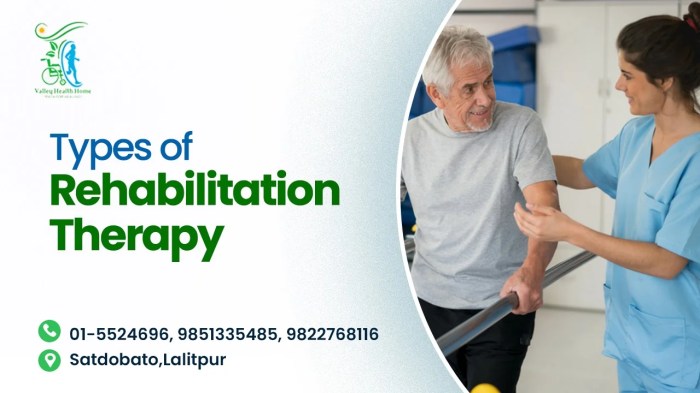
Rehabilitation therapy is like a superhero cape for those recovering from injuries or health setbacks, swooping in to save the day one stretch and squat at a time! Imagine a world where your body gets a second chance, where each therapy session is a step closer to the dance floor (or the couch, no judgment here). It’s not just about physical healing; it’s a delightful cocktail of techniques, nutrition, and the occasional motivational pep talk that fuels the journey back to health.
In this riveting exploration, we’ll unravel the fascinating world of rehabilitation therapy, diving into its core fundamentals, diverse techniques, and heartwarming success stories that remind us of the resilience of the human spirit. Buckle up, because we’re about to embark on a journey where pain meets gain, and wellness is the destination.
Rehabilitation Therapy Overview
Rehabilitation therapy is like the superhero of the medical world, swooping in to help individuals bounce back stronger after injury or illness. It encompasses a variety of practices dedicated to helping people regain their independence and improve their quality of life. Whether it’s a sprained ankle or recovering from a stroke, rehabilitation therapy provides tailored approaches to ensure a smooth and effective recovery journey.Rehabilitation therapy combines multiple techniques and methods, each designed to cater to the specific needs of the individual.
The significance of this therapy lies not only in physical recovery but also in psychological support, empowering individuals to set and achieve their personal goals. This holistic approach ensures that patients return to their daily lives with confidence and enthusiasm.
Rehabilitation Therapy Techniques and Methods
A buffet of techniques awaits those embarking on their rehabilitation journey, offering a smorgasbord of choices tailored to individual needs. The following methods play a pivotal role in the recovery process:
- Physical Therapy: This technique focuses on restoring movement and function to the body. Physical therapists employ exercises, stretches, and manual therapy to relieve pain and improve mobility, making you feel like a superhero on the road to recovery.
- Occupational Therapy: In this realm, therapists help individuals regain the skills needed for daily living and work. From adapting environments to teaching new skills, this therapy is all about empowering individuals to live life to the fullest.
- Speech Therapy: For those facing challenges with communication or swallowing, speech-language pathologists swoop in with tailored exercises and strategies. They help restore clarity and confidence in expression, ensuring words flow as freely as a river.
- Cognitive Rehabilitation: This technique focuses on improving cognitive functions like memory and problem-solving skills, particularly crucial for individuals recovering from traumatic brain injuries. Think of it as a mental workout, building up those brain muscles!
“Rehabilitation therapy is about rebuilding lives, one step at a time.”
Success Stories and Case Studies
The true magic of rehabilitation therapy shines through heartwarming success stories where individuals reclaim their lives against all odds. These case studies showcase the effectiveness of various therapeutic approaches, fostering hope and inspiration.One notable case involves a young athlete who suffered a severe knee injury during a game. With dedicated physical therapy focused on strengthening, flexibility, and pain management, he returned to the field within months.
His therapist incorporated innovative techniques, including balance training and resistance exercises, enabling him not only to recover but to outperform his previous records!Another inspiring story features an elderly woman who experienced a stroke. After a personalized rehabilitation program that included occupational and speech therapy, she regained her ability to communicate and perform daily activities. Her determination and her therapists’ support turned her daunting recovery journey into a triumphant return to normalcy.These stories affirm that rehabilitation therapy is not just about the physical aspects of healing, but about restoring hope, confidence, and the ability to enjoy life again.
With each session, clients step closer to their goals, proving that recovery is indeed possible.
Health and Nutrition
Nutrition plays a vital role in rehabilitation therapy, much like a good referee in a sports match—essential for ensuring everything runs smoothly. It supports recovery processes, helping the body repair itself and regain strength after injury or surgery. Without the right nutrients, the body might feel like a car running on empty, sputtering its way through recovery instead of zooming to full function.Proper nutrition enhances healing, reduces complications, and can even make those grueling therapy sessions feel less like a chore and more like a victory lap.
Eating well can boost energy levels and improve mood, which is as crucial as a good playlist when facing the treadmill of rehabilitation. Let’s explore the essential nutrients that act as the building blocks for recovery.
Essential Nutrients for Optimal Healing
To provide a clear view of what your body craves during the rehabilitation journey, let’s take a gander at the essential nutrients that play key roles in healing. Each nutrient has its unique superpower, ready to assist your body in bouncing back like a rubber ball.
| Nutrient |
Role in Healing |
Sources |
| Protein |
Repairs tissues and builds muscle |
Meat, fish, eggs, legumes |
| Carbohydrates |
Provides energy for recovery |
Whole grains, fruits, vegetables |
| Fats |
Aids in nutrient absorption and provides energy |
Nuts, seeds, avocados, olive oil |
| Vitamins |
Supports immune function and healing |
Fruits, vegetables, dairy products |
| Minerals |
Assists in muscle contraction and nerve function |
Dark leafy greens, dairy, meat |
This table reflects how each nutrient contributes to the healing process, ensuring your body has the tools it needs to repair itself. Think of it as a toolbox for recovery—each tool (nutrient) is essential for fixing the various parts (tissues, muscles) that need attention.
Dietary Approaches Beneficial During Rehabilitation
When it comes to recovery, dietary approaches can vary, but they all share the common goal of nourishing the body back to health. Here are a few dietary methods that can be particularly beneficial:
1. Mediterranean Diet
Rich in fruits, vegetables, whole grains, and healthy fats, this diet is like the warm, welcoming hug from a grandma that your body craves. It promotes heart health and reduces inflammation, which is like having a personal cheerleader during recovery.
2. High-Protein Diet
Essential for muscle repair, this approach ensures your body has enough building blocks to reconstruct the damage. Think of proteins as construction workers, each one dedicated to rebuilding and fortifying your bodily structures.
3. Anti-Inflammatory Diet
Focused on reducing inflammation, this diet emphasizes foods like berries, fatty fish, and nuts. It’s like putting a cold compress on a sprained ankle—soothing and necessary for recovery.
4. Balanced Diet
The classic approach, ensuring a mix of all food groups. It’s akin to a well-rounded education, equipping the body with diverse nutrients to tackle recovery from every angle.Each of these dietary approaches brings unique benefits to the table. Selecting one may depend on personal preferences, specific health needs, or even the advice of a nutrition professional. Remember, the right dietary choice can be the difference between limping along and striding confidently back into life.
Pain Management Strategies
In the world of rehabilitation, pain management is like a superhero cape – it helps patients tackle discomfort and emerge victorious in their recovery journeys. Just as a chef meticulously selects ingredients for a gourmet dish, therapists blend various techniques to create a personalized pain management strategy that suits each patient’s unique needs. Let’s dig into the toolbox of pain management strategies that can help soothe those aches and pains while keeping spirits high!
Pain Management Techniques in Rehabilitation
Pain management in rehabilitation settings can be likened to a delicious buffet – there’s something for everyone! A combination of techniques ensures that patients can find relief and get back to their daily lives. Here are some common strategies therapists employ:
- Physical Therapy: The backbone of rehabilitation, involving tailored exercises and movements that aim to reduce pain and restore function. Think of it as a personal trainer for your muscles, minus the gym selfies!
- Medication: Pain relievers, such as NSAIDs or opioids, can be prescribed as part of a comprehensive plan. It’s essential to find the right dosage – too little, and you feel like a gladiator with a dull sword; too much, and you may feel like you’re floating on a cloud, but not in a good way!
- Heat and Cold Therapy: The classic duo! Applying heat can relax sore muscles, while cold packs can numb pain and reduce swelling. It’s like a spa day for your body, just without the cucumbers on your eyes!
- Mindfulness and Relaxation Techniques: Techniques like meditation, breathing exercises, and guided imagery can help patients focus their minds away from pain. Plus, it’s a great excuse to sit quietly and ignore the world for a few minutes!
- Transcutaneous Electrical Nerve Stimulation (TENS): This technique uses low-voltage electrical currents to relieve pain. It’s like sending little electric fairies to dance on your nerves and distract them from the pain. Sparkle and zap, anyone?
Understanding pain levels is crucial for effective management. Patients can use a variety of scales, often ranging from 0 (no pain) to 10 (the worst pain imaginable). Communicating this to therapists can be as straightforward as rating your discomfort after a night of eating too much pizza – and who hasn’t been there? Maintaining open lines of communication ensures that pain management strategies can be adjusted as needed, much like tuning a guitar for that perfect note.
Connection Between Pain Management and Mental Health
The relationship between pain management and mental health is as intertwined as spaghetti and meatballs – one influences the other in a deliciously complicated manner. Chronic pain can lead to feelings of frustration, anxiety, and depression, like a rain cloud following you around on a sunny day. Conversely, mental health issues can exacerbate the perception of pain, making it feel like every ache is amplified.
Recognizing this symbiotic relationship is essential for recovery. Here are some vital points to consider:
- Emotional Support: Having a strong support system can significantly alleviate feelings of isolation and despair. It’s like having a personal cheerleader; “You can do it! Pain? What pain?”
- Coping Strategies: Developing healthy coping mechanisms such as journaling, art, or even talking to a therapist can help manage both pain and mental health. Sometimes, you just need a good rant – preferably over coffee and donuts!
- Mind-Body Connection: Techniques that promote relaxation and positive thinking, such as yoga and tai chi, can help patients cope with both pain and stress. Who knew that stretching and deep breathing could double as a superhero power?
- Setting Realistic Goals: Working with therapists to set achievable recovery milestones can boost confidence and motivation, reducing the emotional weight of chronic pain. After all, every small victory is a reason to celebrate, even if it’s just getting out of bed!
Incorporating effective pain management strategies not only helps in alleviating physical discomfort but also plays a pivotal role in enhancing mental well-being. With the right support, you can tackle both pain and mental health challenges like a boss!
Personal Training Integration
Integrating personal training into rehabilitation therapy is like adding sprinkles to a cupcake—just makes everything better! Personal trainers can step in as the supportive sidekick in a client’s recovery journey, ensuring they bounce back stronger, more agile, and maybe even a little more fabulous than before. Personal training offers a unique opportunity to complement rehabilitation therapy by introducing tailored exercises that focus on strength, flexibility, and functional movement.
Rehabilitation often lays the groundwork, but personal training can build the house—complete with a swimming pool of confidence and a patio of empowerment. This combination can significantly enhance a client’s recovery experience, making it both effective and enjoyable.
Program Structure for Clients in Recovery
Creating a structured program for clients transitioning from rehabilitation to personal training is crucial for their continued progress. Here are the core elements to consider when designing such a program:
1. Assessment and Evaluation
Before jumping into squats, personal trainers should conduct a thorough assessment to understand the client’s current physical state. This includes evaluating mobility, flexibility, strength, and any specific rehabilitation needs. Think of it as a detective job where trainers gather clues to uncover the mystery of the client’s body!
2. Goal Setting
Establish clear, achievable goals that align with the client’s rehabilitation outcomes and personal aspirations. Goals should be specific, measurable, attainable, relevant, and time-bound (SMART). For example, if a client has been working on knee strength, a goal might be, “Complete ten bodyweight squats without discomfort in four weeks.”
3. Exercise Progression
Gradually introduce exercises that build on rehabilitation progress. Start with low-impact movements, and as the client gains strength and confidence, progressively increase intensity and complexity. It’s like leveling up in a video game—each stage brings new challenges and rewards!
4. Incorporate Functional Movements
Focus on exercises that mimic daily activities to promote functional strength. This approach ensures that clients can return to their routines with ease. Think of exercises like squats, lunges, and core stability work—everyday tasks become child’s play!
5. Monitoring and Feedback
Regularly check in with clients to assess their progress and adjust the program as necessary. This could involve feedback on their performance, physical reactions, and emotional well-being. Trainers should be like a GPS, recalibrating the route when the client takes an unexpected detour.
Assessing Readiness for Transition
Determining if a client is ready to transition from rehabilitation to personal training is key to their ongoing success. Here are some insightful indicators to consider:
Physical Capability
Evaluate if the client can perform basic movements without pain or discomfort. The absence of pain is like the green light at a traffic signal—it’s time to go!
Confidence Levels
A client’s self-assurance plays a significant role in their readiness. If they express excitement about exercises and demonstrate willingness to engage in new challenges, that’s a promising sign.
Communication with Healthcare Providers
Collaboration with the client’s rehabilitation team is essential. If healthcare providers give the thumbs up, trainers can proceed with confidence knowing that the client is cleared for more intense training.
Functional Assessments
Conduct functional tests to ensure the client can move through specific ranges of motion and perform fundamental exercises without limitations. Think of these tests as fitness checkpoints on the road to recovery.By carefully integrating personal training with rehabilitation therapy, clients can experience a seamless transition, turning their recovery journey into an empowering experience filled with achievements, progress, and maybe a bit of sweat—and laughter along the way!
Health and Obesity Considerations
When it comes to rehabilitation therapy, obesity isn’t just about the numbers on the scale; it’s a complex issue that involves physical health, psychological well-being, and social factors. With the rising rates of obesity, rehabilitation professionals are stepping up to the plate (and the treadmill) to help individuals tackle these challenges head-on, armed with the right strategies and a sprinkle of humor along the way.
Think of rehabilitation as a team sport, where everyone is on the same side, cheering you on towards a healthier lifestyle!
Addressing Obesity-Related Issues in Rehabilitation
Rehabilitation therapy plays a crucial role in addressing the multifaceted issues associated with obesity. It’s not just about losing weight; it’s about improving overall health, mobility, and quality of life. By integrating tailored strategies, therapists can help individuals navigate their unique journeys towards wellness. Here’s how rehabilitation tackles obesity-related challenges:
-
Individualized Assessment:
Rehabilitation begins with a thorough assessment to understand the patient’s medical history, physical capabilities, and personal goals. This isn’t a one-size-fits-all deal; it’s more like a custom-tailored suit that fits just right!
-
Comprehensive Health Plans:
These plans combine physical activity, nutrition guidance, and behavioral therapy. Just like assembling a superhero team, each component is vital for the mission ahead—fighting obesity!
-
Monitoring Progress:
Regular check-ins help gauge improvement and adjust the plan accordingly. Think of it as your personal progress scoreboard, where every small victory counts towards the ultimate goal.
-
Education on Obesity:
Empowering patients with knowledge about obesity-related health risks, nutrition, and exercise can help them make informed choices. Knowledge is power, and in this case, it might just be the cape that helps them soar!
Incorporating Physical Activity for Obese Patients
Incorporating physical activity into rehabilitation programs for obese patients is not just important—it’s essential. Regular activity helps in weight management, boosts mood, and enhances physical fitness. Here’s how rehabilitation professionals can make movement enjoyable and achievable:
-
Gradual Introduction:
Start with low-impact activities to build endurance and confidence. Think of it as easing into a hot bath—no one likes jumping straight into the deep end!
-
Fun and Engaging Activities:
Incorporating dance, swimming, or even chair aerobics can make exercising feel less like a chore and more like a party. The only thing missing is the disco ball!
-
Setting Achievable Goals:
Small, realistic goals can foster a sense of accomplishment. Whether it’s a 5-minute walk or lifting a light weight, every step is a victory!
-
Group Activities:
Encouraging group exercises can provide motivation and a sense of camaraderie. After all, who doesn’t love sweating it out with friends and sharing stories over a well-earned smoothie afterward?
Psychological Aspects of Obesity and Recovery
The psychological journey of overcoming obesity in a rehabilitation setting is just as vital as the physical aspect. Addressing mental health concerns can significantly enhance recovery outcomes. Here are some key considerations:
-
Coping Strategies:
Teaching patients effective coping mechanisms helps manage stress and emotional eating. It’s like equipping them with a toolkit for life, ready to tackle any challenge that comes their way!
-
Supportive Environment:
Creating a non-judgmental space encourages open discussions about feelings and struggles. When patients feel safe, they are more likely to engage fully in their rehabilitation journey.
-
Building Self-Efficacy:
Encouraging patients to believe in their abilities can motivate them to stick with their programs. A little self-belief can go a long way—like finding that extra slice of pizza at the bottom of the box! (Just kidding, let’s stick to veggies.)
-
Focus on Positivity:
Celebrating small successes can help shift the focus from what’s not working to what is, making the journey enjoyable. Remember, laughter is the best medicine, especially when it comes with a side of broccoli!
Physical Therapy Techniques
Physical therapy is like a superhero cape for your body, swooping in to save the day when injuries or conditions try to bring you down. With various techniques at their disposal, physical therapists work diligently to restore mobility, alleviate pain, and promote overall healing. Whether you’ve taken a tumble down the stairs or just need a little TLC after a long workout, physical therapy has your back… and your legs… and your arms!Physical therapy encompasses a rich tapestry of practices, each designed to address the unique needs of the patient.
Techniques can range from manual therapy to therapeutic exercises, modalities like ultrasound and electrical stimulation, and even innovative approaches like dry needling. The goal is always the same: to get you back on your feet, doing the things you love, without feeling like you’ve run a marathon through a cactus patch.
Physical Therapy Practices and Their Roles
Understanding the different physical therapy practices is essential for effective rehabilitation. Here’s a look at some common techniques and how they contribute to your recovery:
| Technique |
Role in Rehabilitation |
| Manual Therapy |
Hands-on techniques that help relieve pain, improve circulation, and enhance mobility. |
| Therapeutic Exercises |
Specific exercises tailored to strengthen muscles, improve flexibility, and restore function. |
| Modalities (e.g., Ultrasound, TENS) |
Utilize heat, cold, electrical stimulation, or sound waves to reduce pain and swelling. |
| Balance and Coordination Training |
Exercises designed to improve stability and prevent falls, especially in older adults. |
| Dry Needling |
A technique using needles to release muscle tightness and alleviate pain. |
The variety of techniques helps create a comprehensive approach to rehabilitation. However, it’s not just about choosing a technique; it’s about crafting a unique plan for each patient, because one size fits all only works for hats… and even then, they can be a bit snug!
Importance of Individualized Physical Therapy Plans
Each patient is a distinctive puzzle, and understanding this uniqueness is vital for effective rehabilitation. An individualized physical therapy plan takes into account not just the specific injury or condition, but also the patient’s personal goals, lifestyle, and any previous medical history. This tailored approach ensures that patients receive the right mix of techniques and exercises to maximize their recovery.
For instance, an athlete recovering from a sprained ankle may require a focus on strength and agility, while a senior citizen might need a plan that emphasizes balance and flexibility.
“The best physical therapy is not just about the exercises; it’s about understanding the person behind the injury.”
By honoring each individual’s needs, therapists can create a strategy that not only aids in recovery but also motivates and empowers patients on their wellness journey. Just think of it as a personalized Spotify playlist for your body—curated just for you, so every movement is in perfect harmony!
Health and Phobias Management
Phobias can be like uninvited guests at a party; they show up, make a scene, and can ruin the whole vibe. In the context of rehabilitation therapy, phobias can significantly impact patient outcomes, limiting participation, engagement, and overall progress. While fear is a natural part of being human, when it spirals into phobia territory, the road to recovery can become a bumpy ride, often riddled with potholes of anxiety and avoidance.Addressing health-related phobias during therapy is crucial not only for the patient’s psychological well-being but also for the effectiveness of the rehabilitation process.
Phobias can manifest in various forms, including a fear of medical professionals (i.e., white coat syndrome), fear of physical activities, or even specific phobias related to certain exercises or equipment. Overcoming these fears is essential for achieving rehabilitation goals, and numerous techniques can help mitigate these fears.
Techniques for Addressing Health-Related Phobias
A variety of techniques can be employed to help patients confront and manage their phobias, fostering a more conducive environment for rehabilitation. Here are some of the most effective strategies:
- Cognitive Behavioral Therapy (CBT): A structured approach that helps patients identify irrational thoughts and replace them with more rational ones, effectively reducing fear responses.
- Exposure Therapy: Gradual exposure to the feared object or situation in a controlled manner, helping to desensitize the patient over time.
- Relaxation Techniques: Teaching patients methods such as deep breathing, progressive muscle relaxation, or mindfulness to combat anxiety when faced with phobic stimuli.
- Education: Providing information about the rehabilitation process and debunking myths can help alleviate fears related to medical procedures or physical activities.
- Support Groups: Engaging with others who share similar phobias can foster a sense of community and provide encouragement through shared experiences.
“Confronting fears in a supportive environment can turn the tables on phobias, transforming mountains into molehills.”
Case Examples of Successful Phobia Management
Several case studies illustrate the successful application of phobia management techniques in rehabilitation. These examples underscore the importance of personalized approaches in therapy.
- Case Study 1: A 30-year-old woman with a phobia of needles experienced heightened anxiety during physical therapy sessions. By integrating CBT and gradual exposure, she was able to confront her fear directly. After several sessions where she simply viewed pictures of needles, she progressed to watching actual injections being performed on others, eventually overcoming her fear enough to receive necessary medical treatments.
- Case Study 2: A 45-year-old man with a fear of falling avoided physical activities, which impeded his rehabilitation after hip surgery. Utilizing exposure therapy, he was gradually introduced to exercises in a safe environment, starting with simple balance activities. With the help of a supportive therapist, he overcame his fear, ultimately participating in a hiking trip with friends.
- Case Study 3: A teenager with social phobia found it challenging to attend group therapy sessions. By incorporating relaxation techniques and encouraging participation in smaller group settings, the therapist helped him build confidence. Eventually, he was able to join larger groups and even share his experiences, leading to improved social skills and rehabilitation outcomes.
Health and Pilates Integration
Pilates has become a household name in the realm of fitness and rehabilitation, known for its low-impact yet highly effective approach to improving body awareness and strength. For those on the rocky road of recovery, integrating Pilates into rehabilitation therapy can be as refreshing as a slice of watermelon on a hot summer day—invigorating and downright beneficial!In rehabilitation therapy, Pilates serves as a gentle yet potent ally, promoting flexibility, core strength, and overall balance.
It helps patients regain mobility while ensuring they engage their muscles effectively and safely. The beauty of Pilates lies in its ability to adapt to different fitness levels and rehabilitative needs, making it an invaluable resource for therapists and patients alike. Imagine a world where your rehabilitation is less about grimacing through exercises and more about flowing gracefully through each movement—sounds dreamy, right?
Benefits of Pilates in Rehabilitation Therapy
Integrating Pilates into rehabilitation therapy offers several significant benefits, making it a staple for those recovering from injuries. Here are some of the standout advantages:
- Improved Core Strength: Pilates places a hefty emphasis on core stability, crucial for supporting the spine and preventing further injury.
- Enhanced Flexibility: Regular practice can increase flexibility, which is essential for recovery and reducing the risk of future injuries.
- Better Posture: Pilates encourages proper alignment and body mechanics, helping individuals develop a more balanced posture.
- Increased Body Awareness: Practicing Pilates cultivates a deeper understanding of one’s own body, crucial for injury prevention.
- Low-Impact Movement: The gentle nature of Pilates exercises minimizes stress on the body while effectively building strength.
Tailored Pilates Exercises for Rehabilitative Purposes
Below is a selection of Pilates exercises specifically tailored for rehabilitative purposes. Each exercise is designed to target different areas of the body while ensuring safety and effectiveness.
- The Hundred: A classic Pilates exercise that warms up the body while engaging the core and promoting circulation. Lay on your back with your legs in tabletop and pump your arms as you breathe in and out.
- Spine Stretch Forward: This move encourages flexibility in the spine and hamstrings, providing a gentle stretch that feels oh-so-good. Sit up tall and reach forward, keeping your spine long.
- Single Leg Circles: A fantastic exercise for hip mobility and core control. Lying on your back, extend one leg towards the ceiling and draw small circles with it while keeping the rest of your body stable.
- Modified Plank: An excellent way to build strength without overstraining. Hold a plank position on your knees or forearms to engage your core and stabilize your back.
- Bridging: This exercise strengthens the glutes and lower back while stretching the hip flexors. Lie on your back with your knees bent and lift your hips towards the ceiling.
Testimonials from Practitioners on the Effectiveness of Pilates in Recovery
Real-life experiences often speak louder than any textbook. Here’s what some practitioners have to say about the efficacy of Pilates in rehabilitation:
“Incorporating Pilates into my practice has been a game changer for my clients. They not only recover faster but also feel empowered to take control of their bodies.” – Jane Doe, Physical Therapist
“I’ve witnessed miracles with Pilates. Patients who struggled with mobility are now moving with grace and confidence!” – John Smith, Certified Pilates Instructor
“Pilates has been the secret ingredient in my rehabilitation recipes. It’s like giving my patients a gentle nudge toward recovery while they think they’re just having fun!”
Emily Brown, Occupational Therapist
Popular Diets in Rehabilitation
The world of diets can be as confusing as trying to untangle a set of headphones—one moment you’re making progress, and the next, you’re right back where you started. For individuals undergoing rehabilitation, choosing the right diet is crucial, acting as a supportive friend who cheers you on as you recover. This segment dives into the popular diets that are often debated in the context of rehabilitation, summarizing their pros and cons, and debunking some common myths that surround them.
Diet Comparisons and Their Applicability in Rehabilitation
Understanding the different dietary approaches can help individuals select the most beneficial plan during their recovery process. Here’s a breakdown of some popular diets and how they stack up for rehabilitation purposes.
| Diet Type |
Pros |
Cons |
| Mediterranean Diet |
- Rich in healthy fats and whole foods
- Promotes heart health
- Can improve mood and energy levels
|
- Potentially high in calories if portions are not managed
- Not suitable for low-fat diets
|
| DASH Diet |
- Lowers blood pressure
- Rich in fruits and vegetables
- Supports overall health
|
- Can be restrictive for some
- Requires meal planning and prep
|
| Keto Diet |
- May aid in weight loss
- Can reduce inflammation
- Focuses on high fats and proteins
|
- Can lack essential nutrients if not balanced
- May lead to fatigue and irritability initially
|
| Paleo Diet |
- Encourages whole, unprocessed foods
- Potentially beneficial for gut health
|
- Excludes many food groups
- Can be difficult for long-term adherence
|
Common Misconceptions About Diets in Recovery
While many diets offer great benefits, they also come with a side of misunderstandings. Clarifying these misconceptions can help individuals make informed decisions during their rehabilitation journey.
“Not all calories are created equal—eating a donut may have the same calories as a salad, but the effects on your body are wildly different.”
Some of the most widespread myths include:
- All fats are bad: Healthy fats, like those in avocados and nuts, can actually support recovery.
- Carbs are the enemy: Complex carbohydrates provide essential energy needed for healing.
- Detox diets are necessary: The body has its own detox system—your liver and kidneys do just fine without extreme diets!
- One diet fits all: Each person’s recovery is unique, and dietary needs should be tailored accordingly.
By debunking these misconceptions, individuals in rehabilitation can approach their diets more effectively, promoting a smoother and healthier recovery.
Quit Smoking Strategies
Quitting smoking is no small feat; it’s akin to wrestling with a bear while juggling flaming torches—rewarding but undeniably challenging. Rehabilitation plays a crucial role in this endeavor, offering structured support and strategies that can significantly improve the chances of success. It’s not just about willpower; it’s about having a solid plan and the right assistance to kick that pesky habit to the curb.Rehabilitation programs designed for smoking cessation provide a variety of techniques that not only address the physical addiction but also the psychological aspects of quitting.
By employing a multifaceted approach that includes counseling, medication, and behavioral therapies, these programs create a supportive environment where individuals can thrive. The incorporation of structured plans ensures that each step of the quitting process is manageable and tailored to the individual’s needs, ultimately leading to higher success rates than going it alone.
Structured Quit Smoking Plan
This structured plan lays out the roadmap to kick smoking to the curb, with each step designed to support individuals on their journey to a smoke-free life. It’s like a treasure map, except the ‘X’ marks the point where you regain your health and sense of smell.
1. Assessment and Goal Setting
Begin with a thorough assessment to understand triggers and smoking habits. Set realistic, achievable goals—like replacing one cigarette a day with a piece of gum.
2. Behavioral Therapy
Engage in therapy sessions that focus on coping strategies, stress management, and behavioral cues. Think of it as a smoke-free therapy camp, where marshmallows are replaced with motivational quotes.
3. Pharmacotherapy
Consider medications such as nicotine replacement therapies (patches, gums) or prescription medications that help reduce cravings. They’re like the superhero sidekicks of your journey!
4. Support Groups
Join a support group or online community where experiences can be shared, and encouragement is abundant. It’s like a book club, but instead of discussing novels, you’re sharing tales of triumph over tobacco.
5. Follow-Up and Evaluation
Schedule regular follow-up sessions to evaluate progress and adjust the plan as needed. This is the check-in where you celebrate victories and recalibrate strategies for any bumps in the road.
“With the right support and strategies, quitting smoking can transform from a daunting challenge into a manageable journey.”
Success rates in rehabilitation programs for smoking cessation are significantly higher compared to attempts made without assistance. Data from various studies suggest that these programs can double the likelihood of quitting successfully. For instance, one prominent study reported that participants in structured programs experienced a success rate of 30% compared to just 15% for those who tried quitting on their own.
Testimonials from former smokers highlight the power of these rehabilitation strategies. One individual recounted, “I thought quitting was impossible until I joined a program. With the support of my peers and a structured plan, I went from smoking a pack a day to being smoke-free in just three months!” Such stories underscore the importance of rehabilitation in transforming lives and fostering a healthier future, proving that with the right support, anyone can conquer their smoking habit.
Self Hypnosis for Pain Relief
Imagine a magical tool that can help you tackle pain without the need for pills or potions—enter self-hypnosis! This remarkable technique allows individuals to tap into their subconscious mind to manage pain and enhance their overall rehabilitation experience. It’s like having a personal wizard who helps you wave goodbye to discomfort, all while you sit back, relax, and maybe even visualize a sandy beach or a cozy cabin in the woods.Integrating self-hypnosis into rehabilitation therapy can significantly enhance pain management strategies.
By using focused relaxation and mental imagery, individuals can create a powerful internal environment that promotes healing and alleviates discomfort. Research demonstrates that self-hypnosis may reduce the perception of pain, improve mood, and foster a sense of control over one’s body. This practice complements traditional rehabilitation therapies and empowers patients to take an active role in their recovery journey.
Step-by-Step Guide to Practicing Self-Hypnosis
Getting started with self-hypnosis may seem daunting, but with a little practice, you’ll be hypnotizing yourself in no time—without the need for a pocket watch! Here’s a straightforward guide to help you in your quest for comfort:
1. Find a Comfortable Space
Select a quiet environment where you can relax without interruptions. This could be your cozy couch, a serene park bench, or even a hammock (if you’re feeling fancy!).
2. Set an Intention
Determine what you want to achieve with self-hypnosis, such as pain relief, relaxation, or stress reduction. Being clear about your intention helps direct your focus.
3. Breathe Deeply
Close your eyes and take several deep breaths. Inhale through your nose, hold for a moment, and exhale slowly through your mouth. Imagine each breath washing away tension like the tide on a beach.
4. Induce Relaxation
Allow your body to relax progressively, starting from your toes and moving upward. Picture each muscle loosening and letting go of stress. If you feel like a limp noodle, you’re on the right track!
5. Use Visualization
Imagine a peaceful scenario that resonates with you. It could be a tranquil forest or a cozy cabin by the lake. Envision the sensations of that place—what you see, hear, and feel—and immerse yourself in it.
6. Affirmations for Pain Relief
Repeat positive affirmations in your mind, such as “I am in control of my pain” or “My body is healing.” Engage your imagination to amplify the suggestions; envision your pain melting away like ice cream on a sunny day.
7. Reaffirm and Gradually Return
After spending time in this relaxed state, gently bring your awareness back to the present. Wiggle your fingers and toes, and when you’re ready, open your eyes.
8. Practice Regularly
Like building muscle, self-hypnosis gets easier with practice. Incorporate it into your daily routine, and you’ll soon find it becomes second nature.
“Self-hypnosis is not a magic wand, but rather a powerful tool for self-empowerment and pain management.”
Research supports the efficacy of self-hypnosis as a complementary therapy in rehabilitation, with studies indicating that it can lead to significant pain reduction in various conditions, including chronic back pain and arthritis. A meta-analysis published in theInternational Journal of Clinical and Experimental Hypnosis* reviewed multiple studies and concluded that self-hypnosis is effective in improving pain control and reducing the need for medication.
Patients reported feeling more in control and engaged in their healing processes, showcasing how the power of the mind can influence physical health. So, pick up this mental magic trick and wave your wand of well-being!
Closing Summary
So there you have it—rehabilitation therapy is not just a series of exercises; it’s an epic saga of recovery filled with triumphs, challenges, and the occasional giggle over someone’s awkward stretching attempt! With the right blend of nutrition, pain management, and maybe a dash of Pilates, anyone can reclaim their mojo. Remember, the road to recovery might have its bumps, but with rehabilitation therapy, you’ll be cruising smoothly towards a healthier, happier you.
Questions Often Asked
What is the primary goal of rehabilitation therapy?
The primary goal is to help individuals regain their physical and functional abilities, promoting independence and improving overall quality of life.
Who can benefit from rehabilitation therapy?
Anyone recovering from injury, surgery, chronic illness, or those managing pain can benefit greatly from rehabilitation therapy.
How long does rehabilitation therapy typically last?
The duration varies depending on individual needs, but it can range from a few weeks to several months, with each session tailored to progress at a comfortable pace.
Are there any risks associated with rehabilitation therapy?
Generally, rehabilitation therapy is safe. However, like any physical activity, there can be risks of discomfort or injury if exercises are not performed correctly, hence the importance of professional guidance.
Can rehabilitation therapy be done at home?
Yes, many rehabilitation programs include home exercises, especially after initial assessments by a therapist, allowing for continuity of care in a comfortable environment.